
Panels that want to own the hosting
We wanted to bring OVH, Proxmox, Docker hosts and whatever came next, without being forced into one vendor’s idea of infrastructure.
Pulse started inside BM Technologies because looking after client sites properly involved too many disconnected tools and too much manual work. We built a better operating system, then wrapped a proper service around it.
We wanted to bring OVH, Proxmox, Docker hosts and whatever came next, without being forced into one vendor’s idea of infrastructure.
Cloudflare, host nginx, container cache and Redis can all serve stale content. Pulse gives the team one ordered purge path.
A backup you cannot find, verify or restore quickly is theatre. Pulse keeps the history visible and the restore path close.
The team needed accountable, time-bound access without sharing every WordPress, app and server credential across the business.
A website or app is easy to build once. Building the fiftieth one the same way is where runbooks fall apart.
Updates are a good example of why Pulse exists. Knowing that an update is available is not enough. The team needs to know which site it affects, what else is happening around that site and what recovery route exists before work begins.
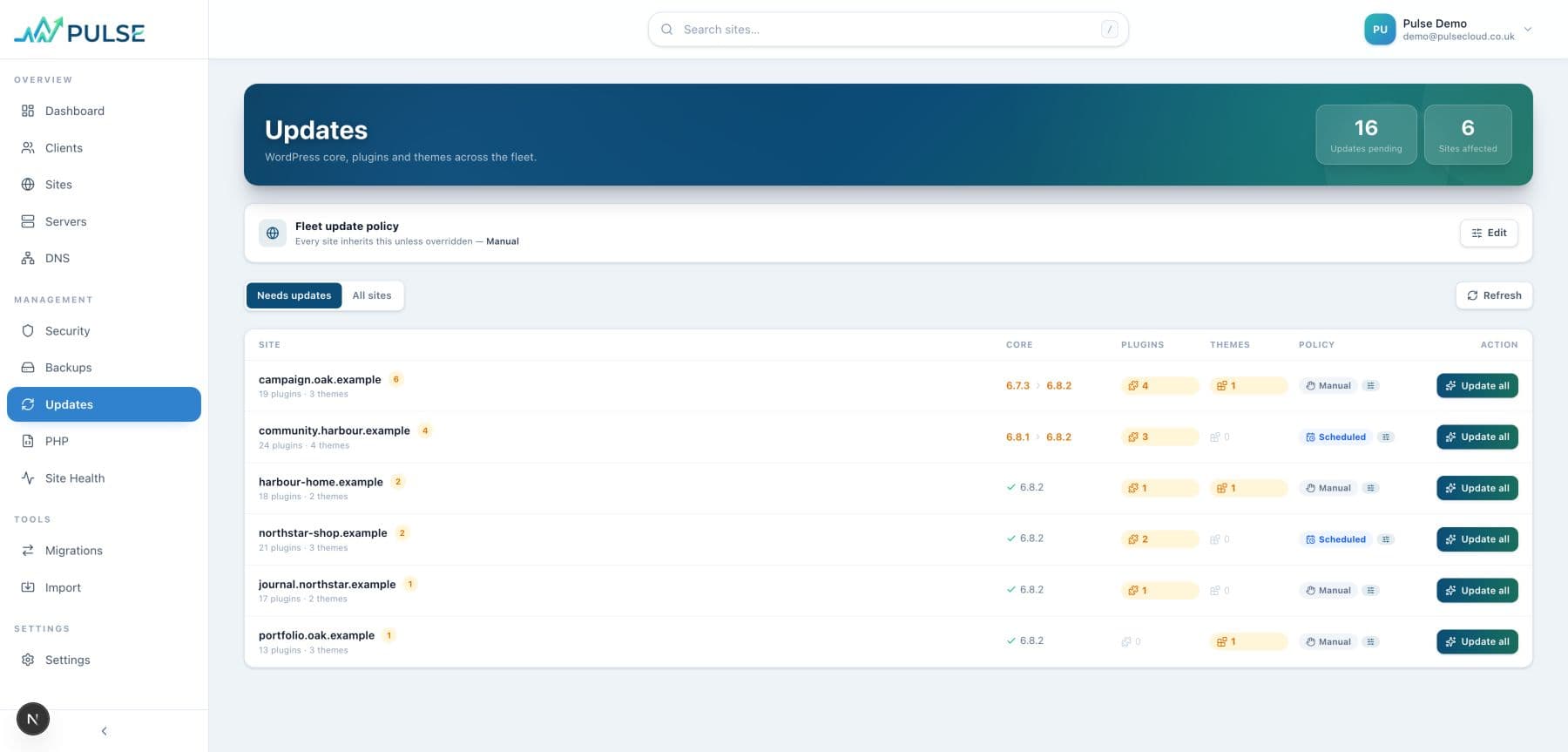
Backups, access, caching, monitoring and site history became part of one managed process. That lets us offer the same calm, accountable service to teams who do not want to build the operation themselves.
If we would not trust the process for our own production clients, we do not offer it to yours. The technology supports the relationship, not the other way around.
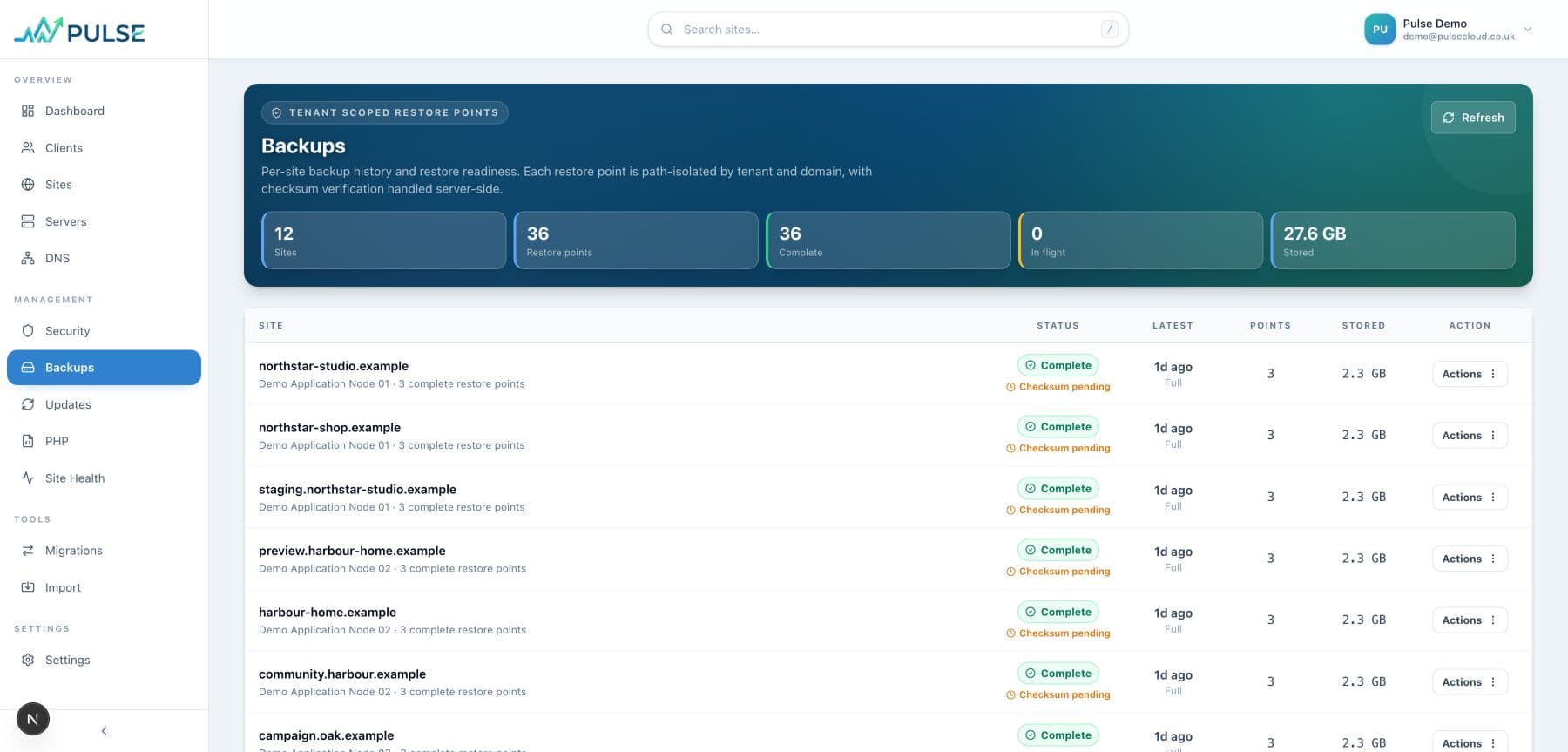
The same principle runs through the platform. Important operational work should leave a usable record, and any risky change should have a recovery path. Pulse keeps backup state and restore context close enough to be useful under pressure.
Tell us about the sites your team supports and where you need a managed partner to step in.
Start a conversation